
If you are a legal resident with a tax-paying job, you can sign up for Spain’s public healthcare.
During the residency application process, you were likely required to have a private health insurance plan. Once you receive residency and start working, however, you can sign up for the public healthcare system saving you money on insurance premiums.
With a private insurance, you were most likely restricted to specific private health practices. Once you sign up for public healthcare, you will have access to public health services and centers.
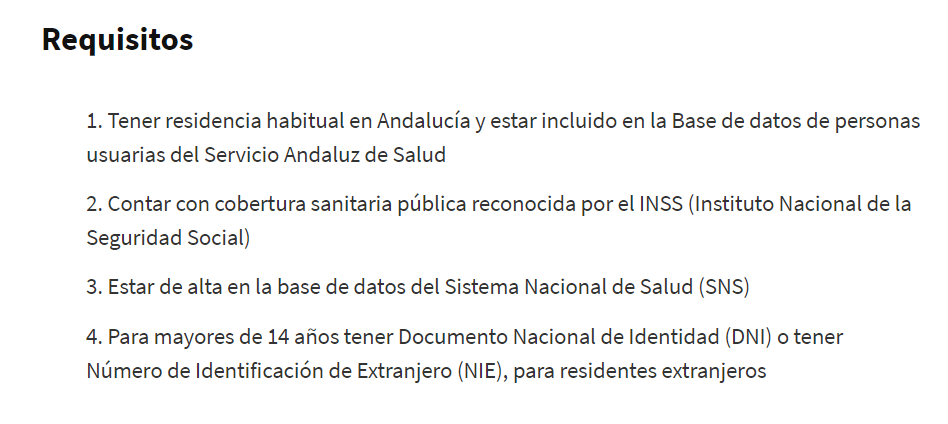
Each comunidad will have their own solicitud and webpage with listed requirements. Below, you can find the stated list of requirements to apply for the tarjeta sanitaria in Andalucía. Most comunidades allow you to either apply online or at the Centro de Salud corresponding with your address. For first time applicants (you), it is likely that you will need to apply in person.
To find the government webpage for your region, you can google “Solicitud y renovación de tarjeta sanitaria en (comunidad)”
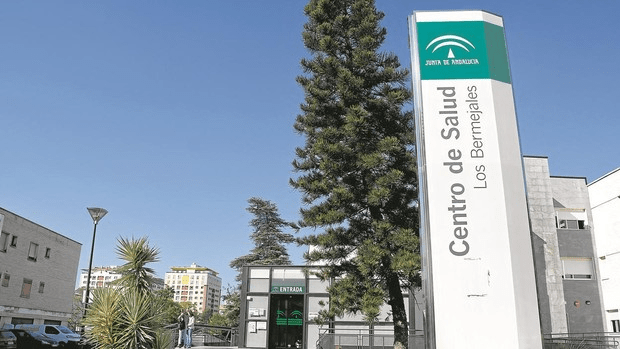
If you are unable to find information online for your comunidad, you can always go directly to the Centro de Salud that corresponds with your address (typically the nearest center) and ask about applying for a health card.
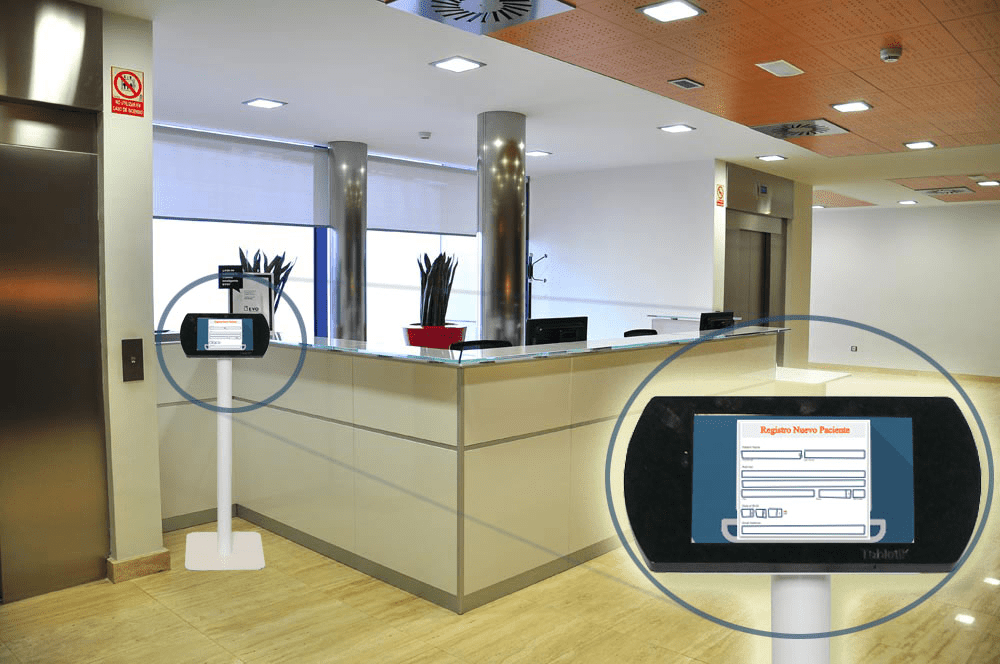
Because you are not yet in the public healthcare system, it might be impossible for you to sign in and get a waiting number to talk with the front desk. I recommend going when it’s not as busy and approaching the front desk politely with your request.
The requirements between comunidades will be very similar, so the information below will be useful for everyone. These are the specifically requested documents at my local health center.
Requirements (Andalucía):
- Work Contract*
- Social Security Number
- Proof of Residence (Empadronamiento + Rental Contract)
- Proof of ID and Residency (Passport + TIE)
- Solicitud
*You can apply to be a beneficiario/a of your partner to receive acces to the public healthcare system if you are without work.
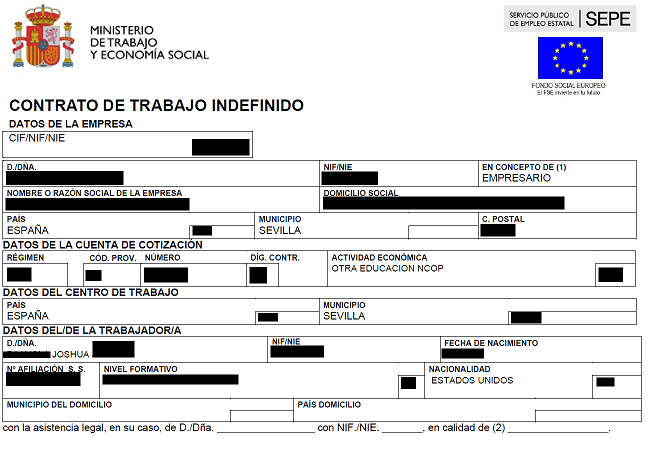
Work Contract + Copy
It must be a tax paying position, so auxiliar de conversación won’t work as it is considered a tax-free stipend/scholarship.
*Although a work contract was specifically requested at my appointment, others have signed up for public healthcare by being a beneficiario/a of their partner. Nonetheless, many bureaucrats are unfamiliar with this at the healthcare center.
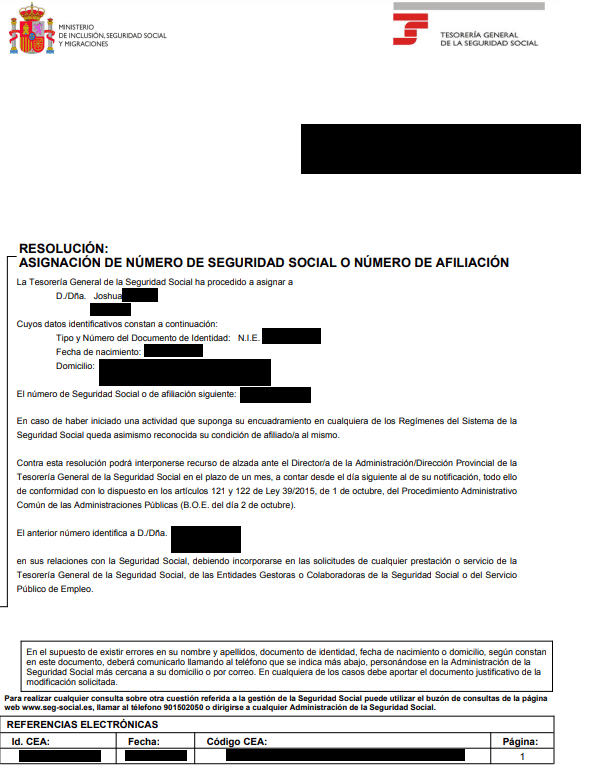
Social Security Resolution + Copy
After applying for a social security number, you will receive a resolution via email. Print the resolution, and bring an extra copy.
Work Authorization and Social Security
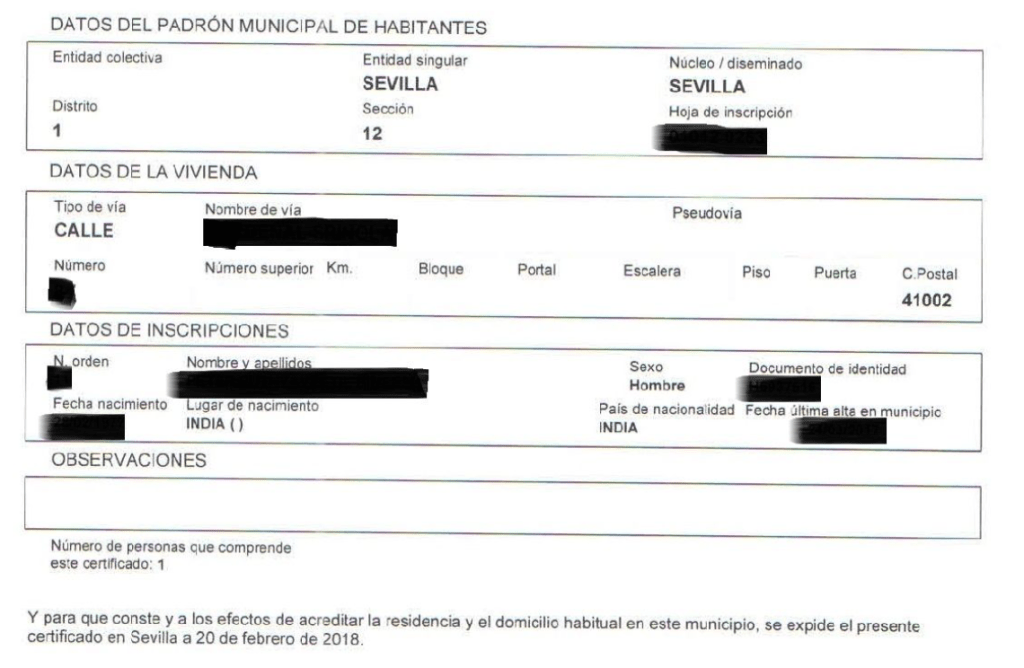
Proof of Residence
Make sure that you are applying at the Centro de Salud that corresponds with your address. Empadronamiento + Copy.
You may also need to bring your Rental Contract + Copy.
This will probably not be a requirement for you, but it was requested by the healthcare workers at my center.
Proof of ID and Residency
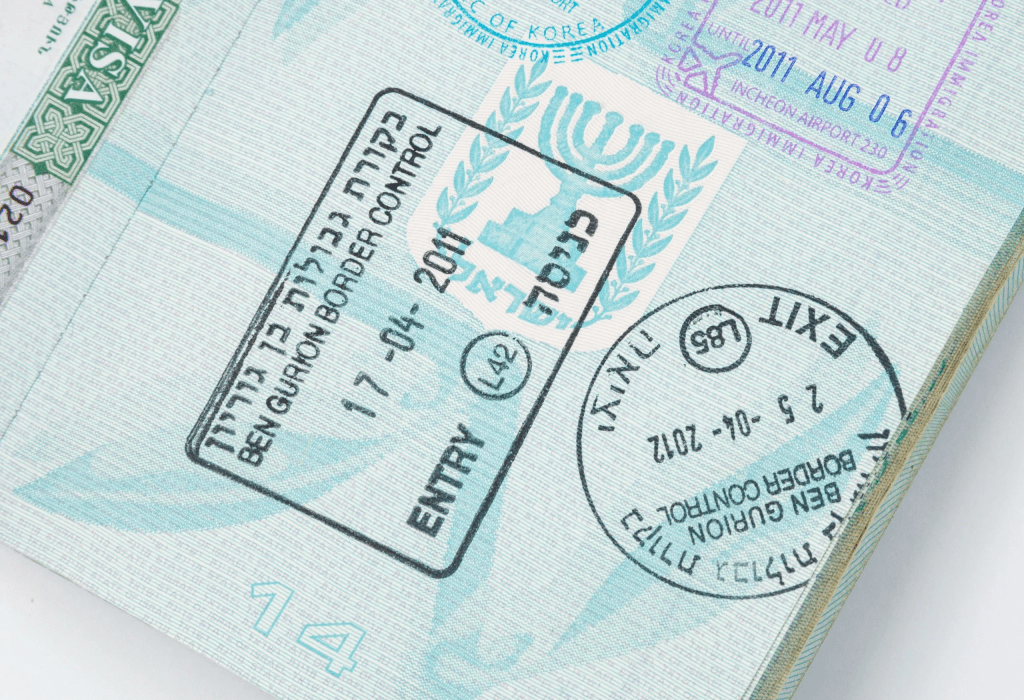
Bring your passport along with a copy of all of your passport pages (yes, all of them). Again, bureaucrats may not ask for all the requirements. This is just a list of everything I had to present.
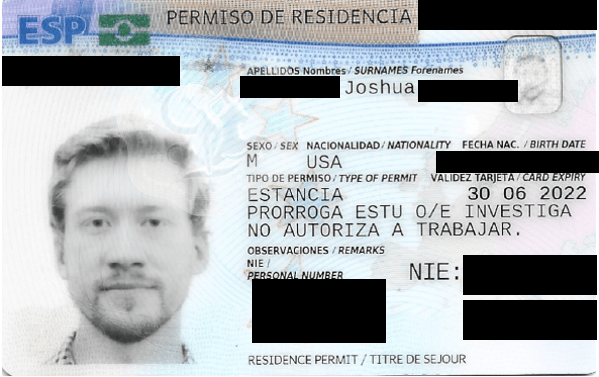
You will also need to present your TIE + Copy
Your TIE will indicate that you have residency in Spain. Bring the original and a copy of the front and back.
Solicitud
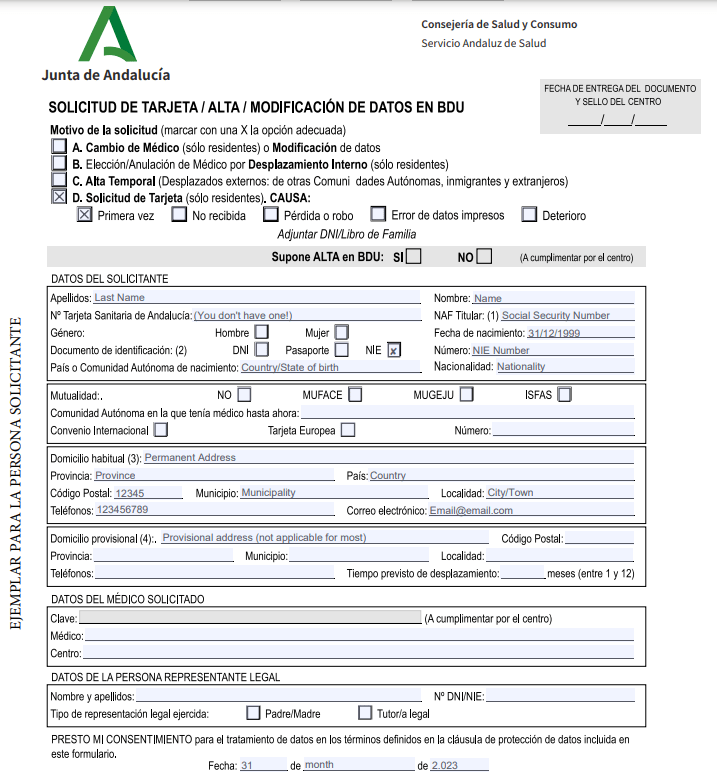
You will also need to bring a completed application + copy. You can get the solicitud online or in person.
Online: You can often find it in the previously discussed webpage that lists the requirements and application process.
If you can’t find it there, you can also google the following:
“Modelo de Solicitud de tarjeta/Alta/Modificación de datos (Region)”
In person: go directly to the Centro de Salud that corresponds with your address (typically the nearest center) and ask for an application form.
Again, you likely won’t be able to sign in and get a waiting number since you aren’t in the healthcare system yet, so go when it’s not busy and politely approach the front desk with your request.
Below, I have an example of an application form from Andalucía.
To apply in person, you must speak with the front desk at the Centro de Salud that corresponds with your address.
Bring all the necessary documents in an organized fashion, politely approach the front desk when it’s not as busy, and ask to apply for a health card.
The front desk workers may be a bit impatient because you will not be able to get a waiting number, but just try to remain polite. Once they finish taking your documents, they will give you a stamped certificate if everything is in order.
This stamped certificate will function as your health card while it is being processed. You will be sent your official health card by mail to your stated address in the application. It may take up to a year to have everything processed and sent.

At this point, you are now signed up for public healthcare. After registering with public healthcare, I cancelled my private insurance and saved 40 euros a month.
If you aren’t a permanent resident yet or have a special agreement, your healthcare is contingent on your employment.
If you found the website useful, please Support the Page. Every little bit helps.
Back to Navigation
The information on http://www.residency2spain.com is provided in good faith and is intended for general informational purposes only. Residency2spain makes no guarantees regarding the accuracy, reliability, or completeness of the content. Any decisions you make based on the information found on this site are made at your own discretion and risk. Residency2spain is not liable for any loss or damage resulting from the use of this website.
Copyright © 2022 Residency2Spain All rights reserved.
-
Behind the Scenes – 2025 Finances
How does Residency2spain.com make money, and how much money does it make? I’ve just finished crunching the numbers and can elaborate on how these guides stay financially solvent. If you are motivated, have a unique idea that can help others, and want to make some money on the side, you can try creating a website…

-
Some Good News
Proceed with caution. Although the state of the program may be uncertain, there have been some positive signs (not guarantees) for 2026-2027. If you are unfamiliar with what is happening with the auxiliary program, please check out the previous post. As you are probably aware, the auxiliar de conversacion program is being restructured for 2026-2027.…

-
The Future (or End) of the NALCAP Program
Restructuring of the program, multi-million euro fines, and a delay to the application window! Expect major changes to the NALCAP program. If you’d like to keep up-to-date on what’s happening, you can joinMy Auxiliary Facebook group. Some Good News In 2025, the region of Andalucia was fined by the central government for a failure to…

-
A Podcast?
I’d like to share the podcast I have just started with my audience. it’s called Immigrant, not Expat. My goal is to share stories about immigration to hopefully remove the negative connotation surrounding the word “immigrant”. I am deliberately avoiding the word “expat” because I don’t want to reinforce a caste system for immigration. I…

-
Culture Shock!
People who talk about moving to another country may emphasize how different the culture will be and how to deal with culture shock. Spain is a modernized, western country that isn’t too different from the U.S, so in my experience, “shock” isn’t a great way to describe it. There are some differences, though. Most of…
-
250k Views – Day in the Life
The last time we celebrated a view benchmark, I made a post about myself and what led me to create a life in Spain. Now that we’ve hit 250,000 views, I’m posting feet on main! (Open the full image if you are a sicko). Well, the idea of this post is to share a typical…

-
Santiago de Compostela
On an extended weekend, thanks to a public holiday, my partner and I went to Santiago de Compostela. It’s a beautiful city in the northwestern region of Galicia, which is known for its rainy climate and delicious food. Santiago is an interesting city with a unique history. It is the destination of multiple pilgrimage routes…

-
Extra Income – Teaching Online
There are countless ways of saving money while in Spain, but if you want to be able to travel more and enjoy more experiences, increasing your income is a great way to do that. As native speakers of English with experience teaching English as a foreign language in Spain, your teaching services will be in…
-
Saving Money and Being Environmentally Friendly
You don’t need your own terrace garden like me, but you can easily save money and be better for the environment when living in Spain. One of the joys of moving to Europe is that it becomes possible to be environmentally friendly without sacrificing your lifestyle or money. When I lived in Indiana, I remember…

-
Celebrating 75,000 Views – My Journey to Spain
When I first started writing this blog, I never expected getting this type of interest. I just wanted to create something to help others find their lives in Spain and avoid the uncertainties and anxieties that plague bureaucratic processes here. It’s still only a hobby instead of being my actual job, but a lot of…
-
Spanish and U.S. Library Cards
Getting a U.S. library card before leaving for Spain and a Spanish library card while there can provide wonderful (free) services. Libraries have modernized. They provide a wide range of services that can be accessed from anywhere in the world: eBooks, audiobooks, as well as online magazines and newspapers. Individuals travelling to or living in…

-
How I Accidentally Became an Actor in Spain
“Quiet on set, roll cameras, and action!” I desperately choke for breath while grasping at my wounds. With a WW2-era revolver aimed at the entryway of an abandoned farm shed, I am slowly bleeding out while waiting for my enemies to finish me off. Suddenly, I hear noises just outside. It sounds like footsteps, and…

-
NALCAP Webinar 2022 – Highlights
July 28, 2022 Will new regulations affect auxiliares who receive supplemental income in Spain? What should I do before leaving for Spain? How do I find an apartment? What steps should I take first when I arrive in Spain? The 2022 NALCAP webinar covers topics that can help new auxiliaries and returning auxiliaries. Find out…

-
Fun Trips around Madrid
Cercedilla Cercedilla is a mountainside municipality Northwest of Madrid. It is about an hour train ride away with the cercanía trains from Atocha (the main train station). The mountainside is filled with nature, flowers, and there is a small ranch with a herd of cows living their best lives grazing on the mountainside. The cows…

-
Budgeting in Spain
The cost of living is much cheaper in Spain, but the salaries are also much lower. How do I budget? What should I expect to spend and save? Just like the U.S, some places in Spain are more expensive than others. Madrid is one of the most expensive cities in Spain, so if you live…

-
The debate of the century: with or without onion.
Spanish tortilla is a traditional dish in Spain similar to an omelette. It has eggs, potatoes, and sometimes diced onions. In Spain people are passionate about food, especially traditional food, and there is a fierce debate in Spain about which type of tortilla is better: with or without onions. Traditionalists will claim that putting onions…

-
So, you want to move to Spain?
There are many reasons to want to live in Spain. The climate is warm and pleasant. The natural landscapes are breathtaking, and with a guaranteed 22 vacation days a year, you have the time to enjoy them. Culturally, Spanish people are kind, welcoming, and outgoing. This generosity also includes the public services offered. Spain has…

 Spanish Bureaucracy Guides