
People who talk about moving to another country may emphasize how different the culture will be and how to deal with culture shock. Spain is a modernized, western country that isn’t too different from the U.S, so in my experience, “shock” isn’t a great way to describe it.
There are some differences, though. Most of these differences are expected, like an outdoor eating culture, beautiful weather, delicious food, friendly and inviting people, and investment into public spaces and infrastructure, but other differences make you go “hmmmmmmm… that’s strange”. In this post, I’ll share a list of those experiences for me.
Personal bubbles

The average personal bubble of the Spanish is vastly different than the typical personal bubble of other cultures. There is a lot more physical contact as well. When I first interacted with my now Spanish partner, I had no clue if she was flirting or just being Spanish (turns out it was the latter… at first). Don’t get the wrong idea! Here are some completely normal things in their culture:
- Kissing cheeks as a greeting (left then right).
- Hands on shoulders. Patting backs, and general physical contact (even if you aren’t personally that close).
- Standing about a foot away when talking (if you take a step back, they will step forward. Ask me how I know, hahahaha).
Here are some things that aren’t normal:
- Hands on thighs or butt.
- Kissing lips.
- Holding hands.
- Hugs (unless you are friends).
And just to tack this on, since culturally, Spaniards are much less reserved, individuals (especially younger, immature ones – like your students) will not be subtle if they have a crush. I’ve been called “guapo”, “precioso”, “fuerte”, “interesante”, “exotico”, and much more from my students. Yes, I had to have a talk about appropriate behavior with them, but you too may have to deal with that.
Yelling (in certain contexts)

You are guaranteed to see this while living in Spain, especially if you are working in the school system. Raising your voice (within boundaries) and verbally scolding are culturally acceptable in Spain. You will see it happen constantly (it’s a passionate culture).
Instead of detentions or write ups, often times, teachers would just tell off individual students (or classes). You will hear from any given teacher at least one monologue a year about respect. In addition to that, there will be at least one class where instead of continuing with the planned lesson, the teacher stares them down and gives them a stern talking to for the rest of class.

This does not stop in the school system. When you go out in the streets, you will find plenty of women yelling at men (it never happens the opposite way in my experience), adults yelling at children (never cruelly – “¡Marcos, No toques eso! Que no, pórtate bien.”), and children yelling at children (cruelly, hahaha). You can’t really call yourself fully integrated until you have seen a couple on a moped with the woman yelling at the man driving.
Everyone is talking to their mom

Mothers in Spain have a hard time letting their little birdies leave the nest. Children become independent much later in life, and above all, they are constantly in communication with their moms. You may notice that a large percentage of people in Spain are always talking on the phone whether it be on the bus, on the subway, or walking on the street. If you ever pay attention, half of those phone calls are with their moms, and the craziest thing is that it will happen regardless of age.

As you can assume, the mother-child relationship is considered sacred above everything. Even if you told your Spanish friend that your mother threatened to kill you and sold you for some Percocets, they would still say, “Well, she is still your mom.”

I believe this is another key reason why Saint Mary is so beloved in Spain.
Spatial awareness
With a very easy-going, relaxed culture along with a lack of personal bubbles, it is a very simple conclusion that Spaniards lack spatial awareness in many contexts. Since Spain actually has infrastructure for non-car traffic, you will get plenty of experience with this fact. These are a couple of examples of the types of people you will run into (literally), when going from place to place.
The meandering grandparents on a stroll.
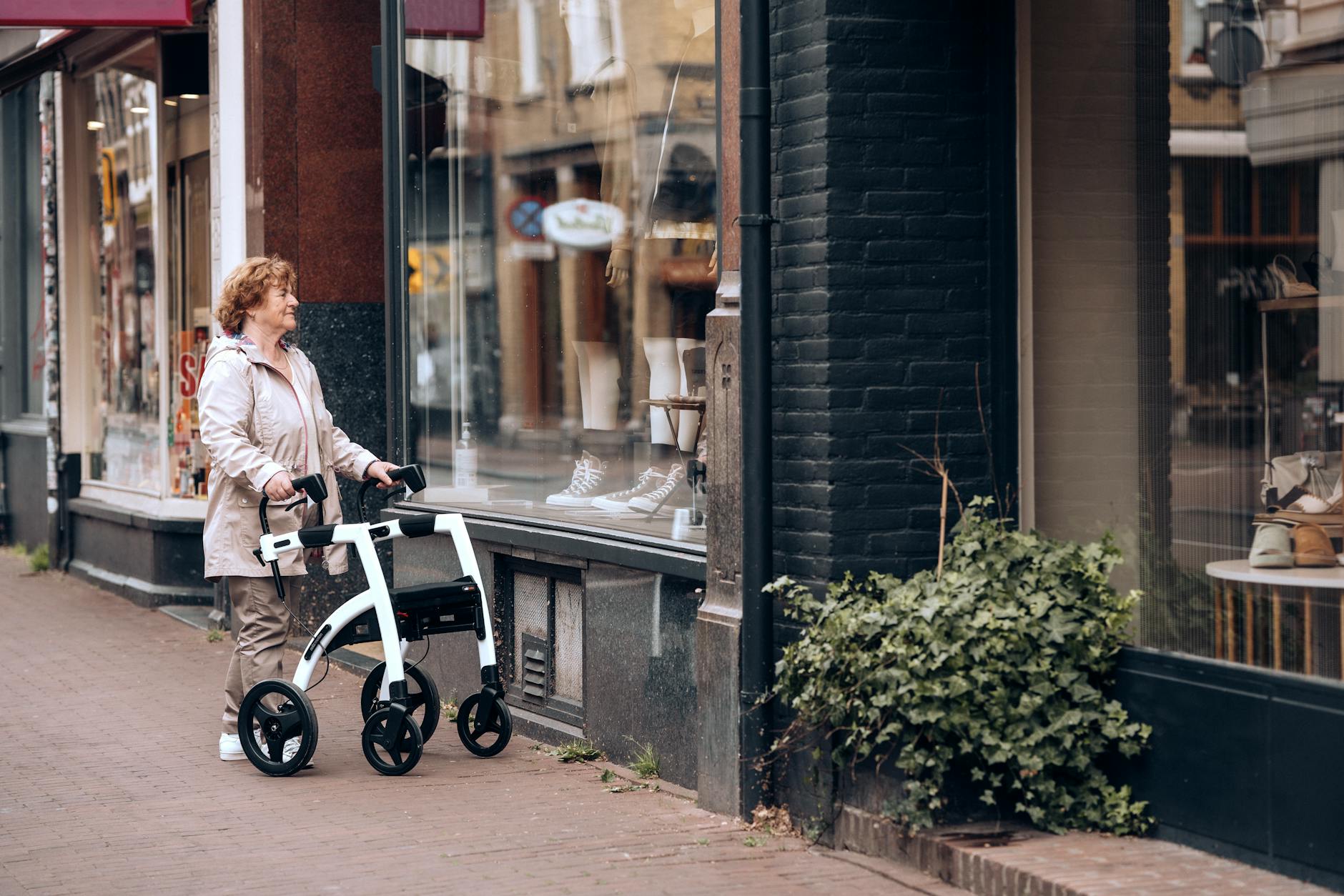
I probably sound cruel complaining about an old man or woman on a walk, but hear me out. I am convinced that these folks see a young person in a rush and intentionally box them out. They have NBA level skill with their precision. You go left, they go left. You turn right, they turn right. You could have a sidewalk that is 10 feet in width, but just one man or woman with a stroller can make it impossible to pass. And always, as a matter of fact, they will start off in the middle of the sidewalk taking up as much space as possible before they start their box out routine.

Even worse yet, they might have an old dog on a leash. Dogs on leashes sound great, but with that technology, they are able to occupy the entire width of the sidewalk. Grandma walks on the left. The dog is on the right, and the leash connecting them is an effective tripwire.
Groups of Teens

Teens congregate, especially in a country with actual, usable public space, so this is another one of those natural consequences of a good thing. Typically, I don’t mind having to walk around large groups of teens walking shoulder to shoulder to occupy the entirety of the sidewalk, but there is a more dangerous version of this issue:

I don’t know why so many parents are buying electric scooters that can go 35 mph for their kids, but it’s too common. Legally, these scooters should remain on bicycle lanes and off sidewalks, but teens don’t usually follow the rules. Also, when riding in groups, they are just as distracted as when they are walking together, except now, Alejandro is flying towards you at top speed.
I’ve had 2 collisions with a teen on a scooter so far. One incident knocked me on my butt, but the other one, I was prepared for. If you see a group of teens flying towards you, lower your center of mass, drop your shoulder, and prepare for impact. It’s always best to avoid crashes, but when 8 teens occupying the entire walkway fly around a corner, there isn’t much you can do. Anyhow, the teen fell, scraped their knee, complained, then walked home (presumably to see their mom).
This lack of spatial awareness affects many aspects of living in Spain, so be prepared for a few bumps and practice saying “excuse me” in Spanish.
Jamón and other meats
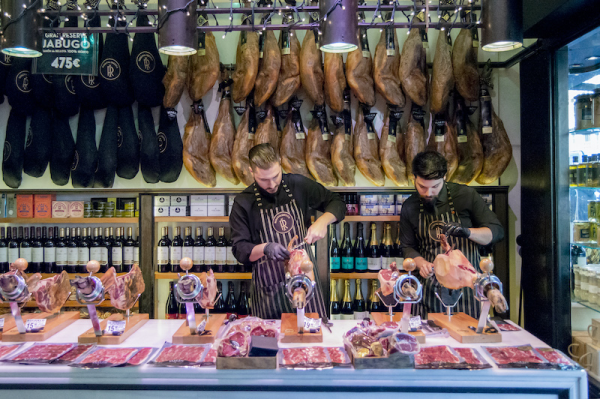
Americans get a very sanitized version of meat consumption. Meat is often prepared and packaged in a way that you could reasonably remain ignorant to its origins. Not in Spain.
Jamón, while delicious, is often sold with the hoof still attached. Other meats such as chicken, pork, and rabbit (yes, rabbit), can be purchased whole. In fact, another delicacy in Spain is roasted piglet (called cochinillo). This dish is often served completely intact. That means all they did was roast the entire piglet, head, hoof, and all.
No imagination is needed to understand where meat comes from if you live in Spain. Personally, I think it’s preferable this way. Even if you aren’t a vegetarian, I think it’s important to recognize where meat comes from. That’s why as a principle, I try to never let food go to waste.
Spicy foods

The Spanish palate just can’t handle spicy food. In my personal opinion, they are worse than the Germans when it comes to spice tolerance. You won’t find spicy peppers in the supermarkets, and good luck finding a restaurant that actually has spicy food.
In fact, at a restaurant if a dish is labelled as “spicy”, when you order it, the waiter or waitress will always reassure you by saying “it’s actually not that spicy”. Damnit, I wanted spicy! That’s why I ordered the spicy dish! Spiciness levels go from nothing to about spicy paprika/black pepper. Even international restaurants like Mexican, Indian, and Thai will often adjust their spiciness levels for the Spanish palate (which basically means almost no heat). Bummer!
Ineffective/uncaring Administrators and Bureaucrats

I’m not painting with broad strokes here. I do not want to wrongfully reinforce the stereotype that Spanish workers are lazy. Many Spanish workers are incredibly hardworking. In fact, a lot of younger employees are pressured into working extra hours off the books to keep up with their workload. My beef is with public employees, specifically, bureaucrats and administrators.
Spain has a weird system for employing civil servants. They have a point system for applicants that consists of long exams (good luck memorizing the constitution and obscure laws related to your field) and quantifying your education, certifications, and work experience. No job interview is required. These placements are highly competitive because they are well paid, have great benefits, and are almost impossible to be fired from. In fact, there is a recent news article about a Spanish civil servant who skipped work for 6 years before getting caught.
Due to this system, there is minimal incentive for some public employees to actually do good work. Of course, public teachers, librarians, police officers, firefighters, and many others are passionate about their jobs and are expected to do good work, but other jobs that involve pencil pushing tend to fly under the radar.
These employees will often provide wrong and misleading information. They will also invent reasons to deny an applicant to avoid work. In fact, there is a specific expression used for this very trend in Spanish “Vuelva usted mañana” (come back tomorrow).
Now that I’ve lived in Spain for 5 years, I have a lot of experience with these employees. When applying for Pareja de Hecho, I had all the required documents in hand, but the bureaucrat refused to take everything insisting that half of it was “unnecessary”. A few weeks later, I received a letter demanding those exact documents.
When applying for my public healthcare card. I came in with the exact documents required again, but the lady at the front desk demanded 5 additional, unrelated documents. Since I lived closeby and was relatively organized, I was able to present the additional documents 30 minutes later. She refused to take those documents and said “Why did you bring me all this? This isn’t required at all. You wasted a lot of paper.” I was fuming!
Over time, you learn how to better manage bureaucrats. If you know your stuff and have brought all the documents required, confidence is everything. When they see that you are unsure about something, that will be an opportunity for them to send you away. Come back tomorrow!
I don’t want this article to put Spain in a negative light. I absolutely love living in Spain. For each negative culture shock, there are 5-10 positive things to say about my experience living here. Every country has their own issues, and I could very well make a much longer list about the reverse culture shock when coming back to America.
Have you ever experienced these mini “shocks”? What surprised you when you moved to Spain?
If you found the website useful, please Support the Page. Every little bit helps.
The information on http://www.residency2spain.com is provided in good faith and is intended for general informational purposes only. Residency2spain makes no guarantees regarding the accuracy, reliability, or completeness of the content. Any decisions you make based on the information found on this site are made at your own discretion and risk. Residency2spain is not liable for any loss or damage resulting from the use of this website.
-
Behind the Scenes – 2025 Finances
How does Residency2spain.com make money, and how much money does it make? I’ve just finished crunching the numbers and can elaborate on how these guides stay financially solvent. If you are motivated, have a unique idea that can help others, and want to make some money on the side, you can try creating a website…

-
Some Good News
Proceed with caution. Although the state of the program may be uncertain, there have been some positive signs (not guarantees) for 2026-2027. If you are unfamiliar with what is happening with the auxiliary program, please check out the previous post. As you are probably aware, the auxiliar de conversacion program is being restructured for 2026-2027.…

-
The Future (or End) of the NALCAP Program
Restructuring of the program, multi-million euro fines, and a delay to the application window! Expect major changes to the NALCAP program. If you’d like to keep up-to-date on what’s happening, you can joinMy Auxiliary Facebook group. Some Good News In 2025, the region of Andalucia was fined by the central government for a failure to…

-
A Podcast?
I’d like to share the podcast I have just started with my audience. it’s called Immigrant, not Expat. My goal is to share stories about immigration to hopefully remove the negative connotation surrounding the word “immigrant”. I am deliberately avoiding the word “expat” because I don’t want to reinforce a caste system for immigration. I…

-
Culture Shock!
People who talk about moving to another country may emphasize how different the culture will be and how to deal with culture shock. Spain is a modernized, western country that isn’t too different from the U.S, so in my experience, “shock” isn’t a great way to describe it. There are some differences, though. Most of…
-
250k Views – Day in the Life
The last time we celebrated a view benchmark, I made a post about myself and what led me to create a life in Spain. Now that we’ve hit 250,000 views, I’m posting feet on main! (Open the full image if you are a sicko). Well, the idea of this post is to share a typical…

-
Santiago de Compostela
On an extended weekend, thanks to a public holiday, my partner and I went to Santiago de Compostela. It’s a beautiful city in the northwestern region of Galicia, which is known for its rainy climate and delicious food. Santiago is an interesting city with a unique history. It is the destination of multiple pilgrimage routes…

-
Extra Income – Teaching Online
There are countless ways of saving money while in Spain, but if you want to be able to travel more and enjoy more experiences, increasing your income is a great way to do that. As native speakers of English with experience teaching English as a foreign language in Spain, your teaching services will be in…

-
Saving Money and Being Environmentally Friendly
You don’t need your own terrace garden like me, but you can easily save money and be better for the environment when living in Spain. One of the joys of moving to Europe is that it becomes possible to be environmentally friendly without sacrificing your lifestyle or money. When I lived in Indiana, I remember…

-
Celebrating 75,000 Views – My Journey to Spain
When I first started writing this blog, I never expected getting this type of interest. I just wanted to create something to help others find their lives in Spain and avoid the uncertainties and anxieties that plague bureaucratic processes here. It’s still only a hobby instead of being my actual job, but a lot of…
-
Spanish and U.S. Library Cards
Getting a U.S. library card before leaving for Spain and a Spanish library card while there can provide wonderful (free) services. Libraries have modernized. They provide a wide range of services that can be accessed from anywhere in the world: eBooks, audiobooks, as well as online magazines and newspapers. Individuals travelling to or living in…

-
How I Accidentally Became an Actor in Spain
“Quiet on set, roll cameras, and action!” I desperately choke for breath while grasping at my wounds. With a WW2-era revolver aimed at the entryway of an abandoned farm shed, I am slowly bleeding out while waiting for my enemies to finish me off. Suddenly, I hear noises just outside. It sounds like footsteps, and…

-
NALCAP Webinar 2022 – Highlights
July 28, 2022 Will new regulations affect auxiliares who receive supplemental income in Spain? What should I do before leaving for Spain? How do I find an apartment? What steps should I take first when I arrive in Spain? The 2022 NALCAP webinar covers topics that can help new auxiliaries and returning auxiliaries. Find out…

-
Fun Trips around Madrid
Cercedilla Cercedilla is a mountainside municipality Northwest of Madrid. It is about an hour train ride away with the cercanía trains from Atocha (the main train station). The mountainside is filled with nature, flowers, and there is a small ranch with a herd of cows living their best lives grazing on the mountainside. The cows…

-
Budgeting in Spain
The cost of living is much cheaper in Spain, but the salaries are also much lower. How do I budget? What should I expect to spend and save? Just like the U.S, some places in Spain are more expensive than others. Madrid is one of the most expensive cities in Spain, so if you live…

-
The debate of the century: with or without onion.
Spanish tortilla is a traditional dish in Spain similar to an omelette. It has eggs, potatoes, and sometimes diced onions. In Spain people are passionate about food, especially traditional food, and there is a fierce debate in Spain about which type of tortilla is better: with or without onions. Traditionalists will claim that putting onions…

-
So, you want to move to Spain?
There are many reasons to want to live in Spain. The climate is warm and pleasant. The natural landscapes are breathtaking, and with a guaranteed 22 vacation days a year, you have the time to enjoy them. Culturally, Spanish people are kind, welcoming, and outgoing. This generosity also includes the public services offered. Spain has…

 Spanish Bureaucracy Guides