
You don’t need your own terrace garden like me, but you can easily save money and be better for the environment when living in Spain.
One of the joys of moving to Europe is that it becomes possible to be environmentally friendly without sacrificing your lifestyle or money. When I lived in Indiana, I remember not being able to recycle because the recycling center was only open from 10am to 2pm Monday to Thursday. As someone who was working a full-time job, that made it impossible to recycle. I couldn’t commute to work in anything besides a personal vehicle because there was no infrastructure that gave me alternatives, and if I wanted to have a healthier diet that included fresh vegetables and fruits, it would cost much more than the typical ultra-processed American diet.
Since moving to Spain, I realized that I can be environmentally friendly AND save money without making any sacrifices. In fact, most of these tricks make my life better. Let’s look at the various ways I save money and benefit the environment from the most impactful to least.
- Shorten Your Commute
- Eat like a Spaniard
- Reduce Food Waste – TooGoodtoGo
- Saving Electricity and Beating the Heat
- Saving Water – The Power of the Shower Bucket
- Gardening and Foraging
Shorten Your Commute

Be mindful when choosing where to live. I am often times perplexed by the auxiliaries who decide to live over an hour away from their schools just to have the opportunity to pay twice as much in rent.
Most auxiliaries will be placed in schools outside of city centers. It may be tempting to live in the most touristy parts of a city, but please consider renting an apartment closer to where you work. You can still enjoy the city center just as much living closer to your workplace as someone who decided to pay €500+ a month in rent for a tiny apartment in the center.
Benefits of living closer to your school:
- Cheaper Rent. Quieter neighborhoods will have rent around and below 350 euros a month. Touristy parts can be almost double that. You’ll also get more space and cheaper local restaurants and supermarkets.
- Less money spent on transport. Even when a single trip may be cheap, it can add up fast!
- Less time spent commuting. You will commute 4-5 times a week to work. Even if you spend every weekend at the center, you will only commute 2-3 times a week to the center. Save time, and enjoy life more!
- Get to know the community. In dense, touristy city centers, you will have more difficulty integrating yourself into the community. Personally speaking, being able to live in a quieter neighborhood means that all my neighbors have gotten to know me. I’ve baked cookies for them, and they have helped me out in many ways. I even have a nickname, “Michigano”.
- Protect the environment. Fewer miles travelled in a year means less energy spent.
Downsides:
- Partying. If you want to party in the city center, you either need to leave early enough to catch the last train back home, make arrangements with a friend who lives in the area, or pay for a taxi.
- You will see your students. It can be awkward at times when living close to your school. Whenever I go out, I see at least one student of mine. Even when I’m out late at the bar with some friends, a little boy or girl may approach and say “Hi teacher!”. Overall, it’s cute and non-problematic, but some people would prefer to avoid those situations.
Eat like a Spaniard
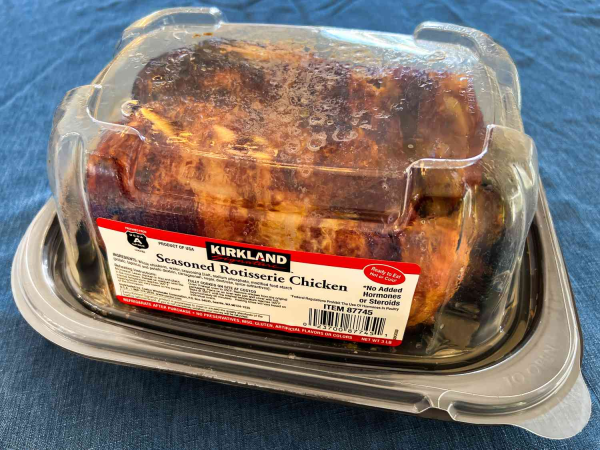
Traditional Spanish foods and ingredients will always be cheaper than foods found in the typical American diet. An added bonus is that it’s healthier and more delicious. Home cooking in Spain makes good use of the cheap, fresh produce grown locally. You’ll find a wide variety of fruits and veggies for incredibly low prices. For protein, you’ll find plenty of recipes with nuts, lentils, chickpeas, beans, peas, tuna, ham, chorizo, and eggs.
Of course, it never hurts to make an American meal every once in a while, but I implore you to test out some traditional Spanish meals. Below, I have a few staples in my diet.
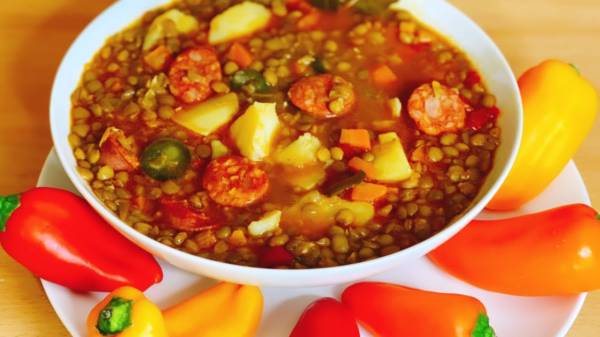
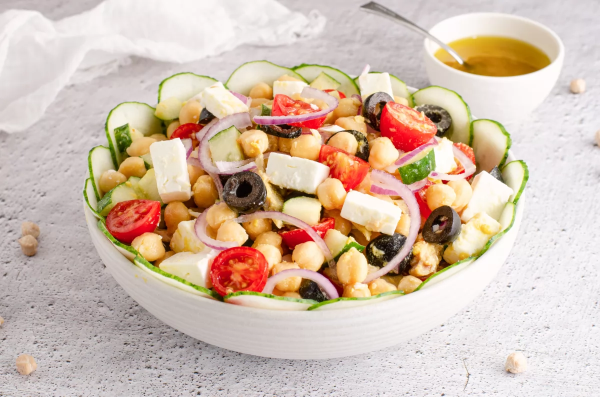

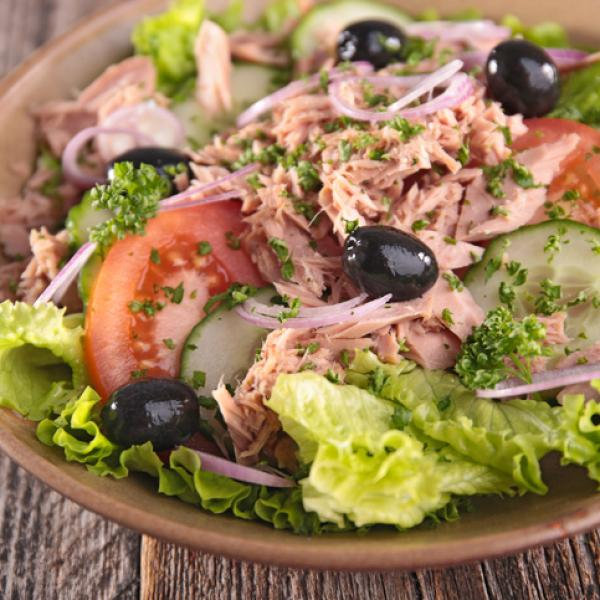
And of course, eating locally grown food is also great for the environment.
If you want to take it a step further, avoid fast-food restaurants altogether. The only benefit of fast-food in America is that it’s the cheapest option. This is simply not true in Spain. You will find cheaper and better quality food in local restaurants in your neighborhood. Instead of McDonald’s, get a serranito at the bar downstairs. Instead of Starbucks, go to a local café.

Reduce Food Waste
This is something that I’ve only recently learned about, but many restaurants, supermarkets, hotels, and other businesses participate in a program to reduce food waste. When they have a surplus of food that’s still good but they can’t sell, they will offer it on the app TooGoodtoGo.
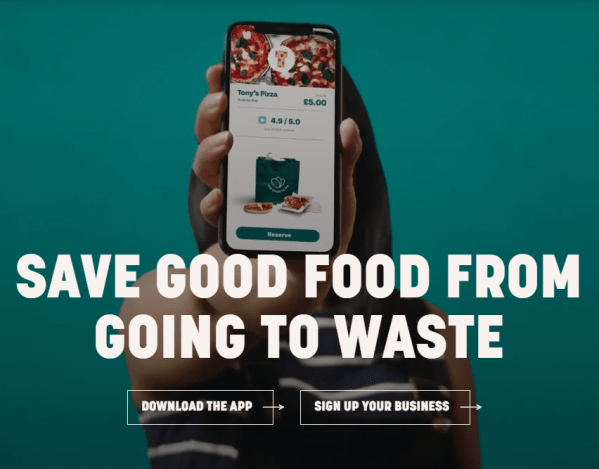
On the app you can find and filter participating local businesses based on distance, what they offer, and pickup times. After selecting the restaurant or supermarket you are interested in, you simply reserve a time to pick up a surprise bag of goodies. These surprise bags will always be priced incredibly low for the amount of goods you get.
Overall, it’s a win-win. The business gets to reduce food waste and make a few bucks. You get a ton of food for a low price, and the planet benefits. It combines all of my favorite things: suprise, cheap food, and reduced food waste. Here is an example of what I typically get for about 50 cents:
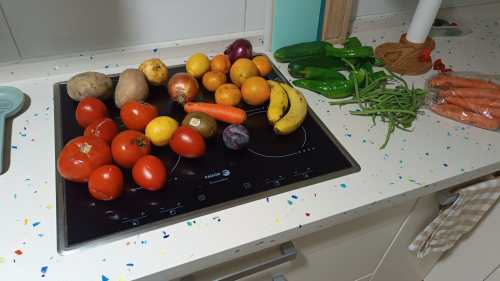
Here is an example of what you might get for 5 euros:
If you use the invite link above, I’ll get 2.50€ in app credit to make more purchases like this (which is basically 4 sandwiches and a dessert worth of value).
Saving Electricity and Beating the Heat
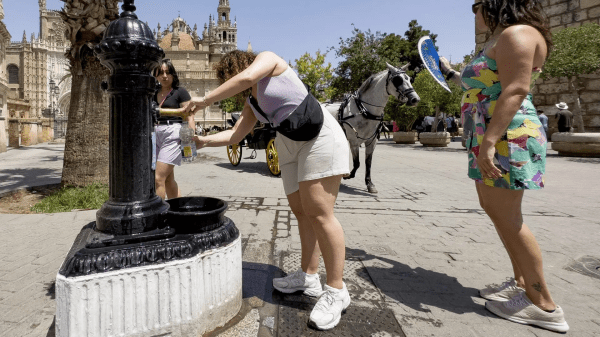
It happens every year. An auxiliary is shocked by a surprise electric bill of 200+ euros during heatwaves. There are ways of keeping cool and saving electricity in the process.
Use the built-in infrastucture designed to beat the heat! If your apartment has an awning, set it during the day and put it back up at night. Even on the hottest days, nighttime temperatures in the south are typically pleasant. You want to block out the sun and the heat during the day, and open everything up at night.
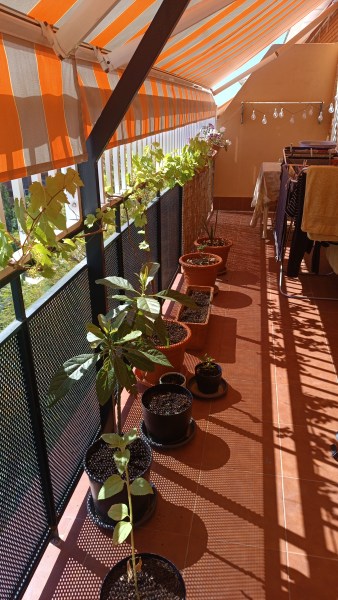
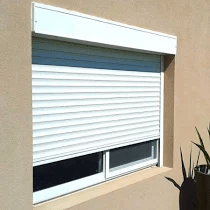
Window blinds – not just for blocking the Sun for your daytime naps. Just like an awning, these are a great tool for keeping the midday heat out of the apartment.
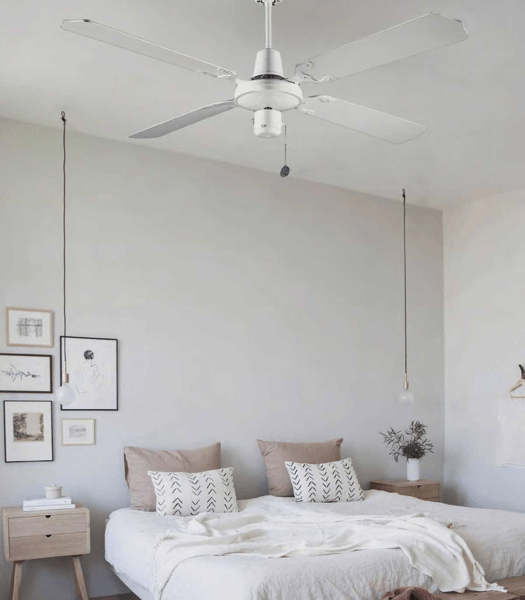
In addition to the window blinds and awning, some apartments have ceiling fans. If not, get your own fan. Circulating the air helps a lot, and it will use a lot less electricity than running the A/C unit all day.
Speaking of laundry day, dryers aren’t really a technology that took off in Spain. Most people hang up their clothes to dry. Your washer may have a centrifuge setting though which helps remove a lot of the water before hanging up your clothes. If it’s 100+ degrees outside and dry, skip or apply a lower centrifuge setting. The wet clothes will dry quickly anyway, and the moisture that evaporates off your wet clothes can help cool down the surrounding air. It also saves electricity.
Last but not least, do as the Spaniards do. Go to the pool to cool off, and at the hottest part of the day, take a nap. Being active in 110+ degree weather isn’t just uncomfortable, it’s unhealthy.
Saving Water – The Power of the Shower Bucket
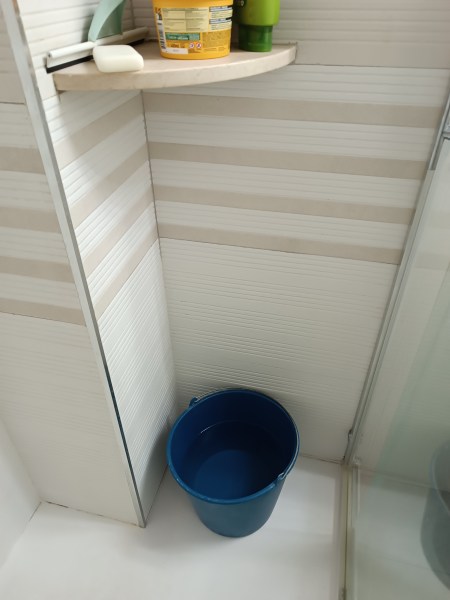
When you turn on the shower and the water is freezing cold, what do you do? If you’re like most people, you probably let the water run down the drain while you wait for the water to heat up. Even if you have a quick water heater, you are probably wasting about 5 liters of water a shower. You can save that water and save money.
Lots of regions of Spain have had drought-like conditions in the past few years. When water levels are critically low, the government may put restrictions on water which affects everyone. Small and simple methods of conserving water can have a big impact, and all you need is a bucket. Put the bucket in the corner of the shower, and everytime you are waiting for the water to heat up, you can fill the bucket.
I use the water accumulated to change the mop water, clean the bathroom, water my plants, and on extremely hot days, cool off the terrace by dumping it on the hot floor.
Gardening and Foraging
As I mentioned before, a lot of the water I save from my showers is used to grow food on my terrace. Overall, growing your own food and foraging locally won’t make a big impact in your budget or the environment, but it is incredibly satisfying to get your food outside of a supermarket.
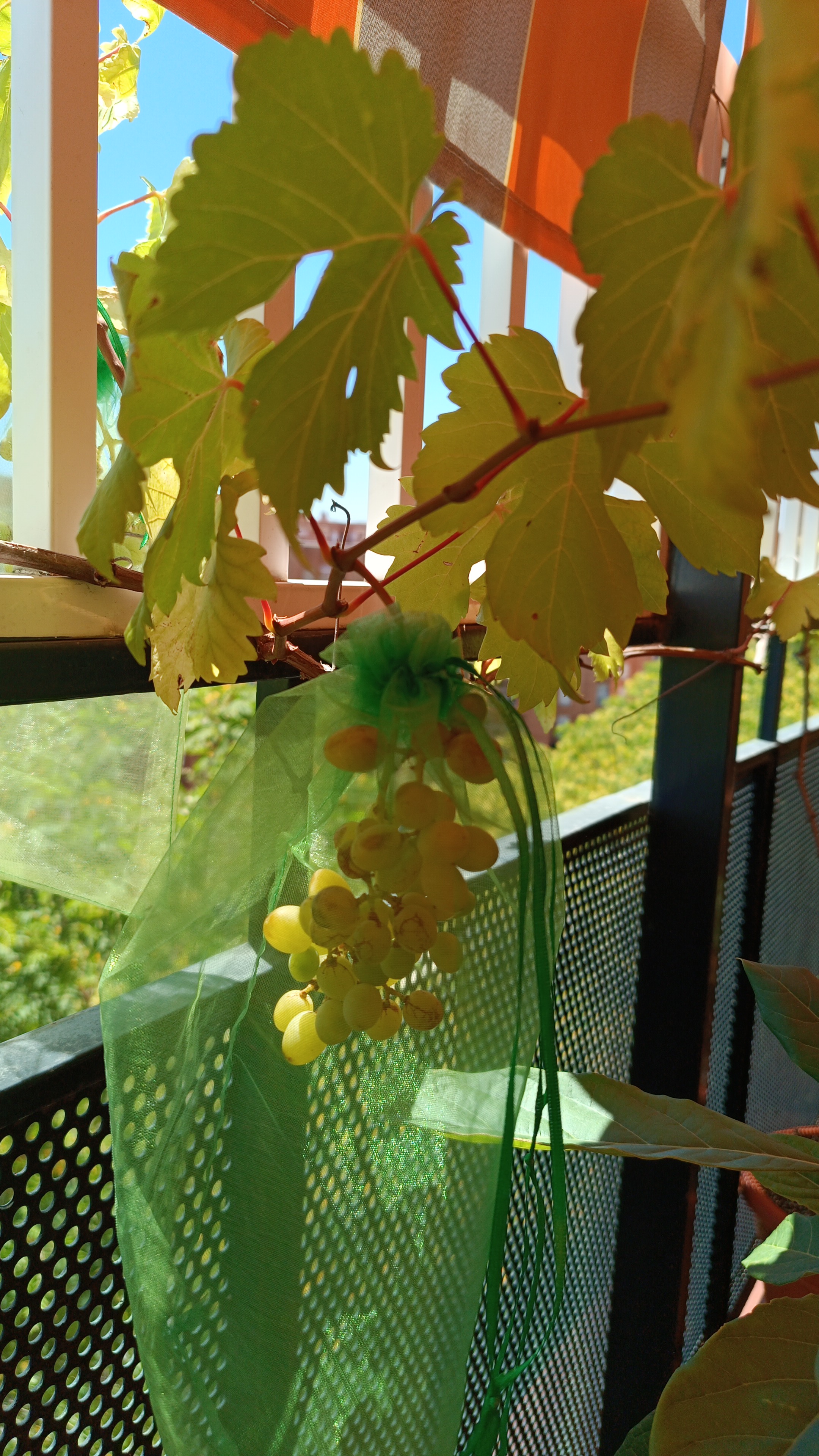
Also, it allows you to get the one thing that Spanish cuisine never includes: spicy peppers! I always make sure to grow at least a few different types of spicy peppers. In addition to that, I grow fresh tomatoes, grapes, and various fruit trees.
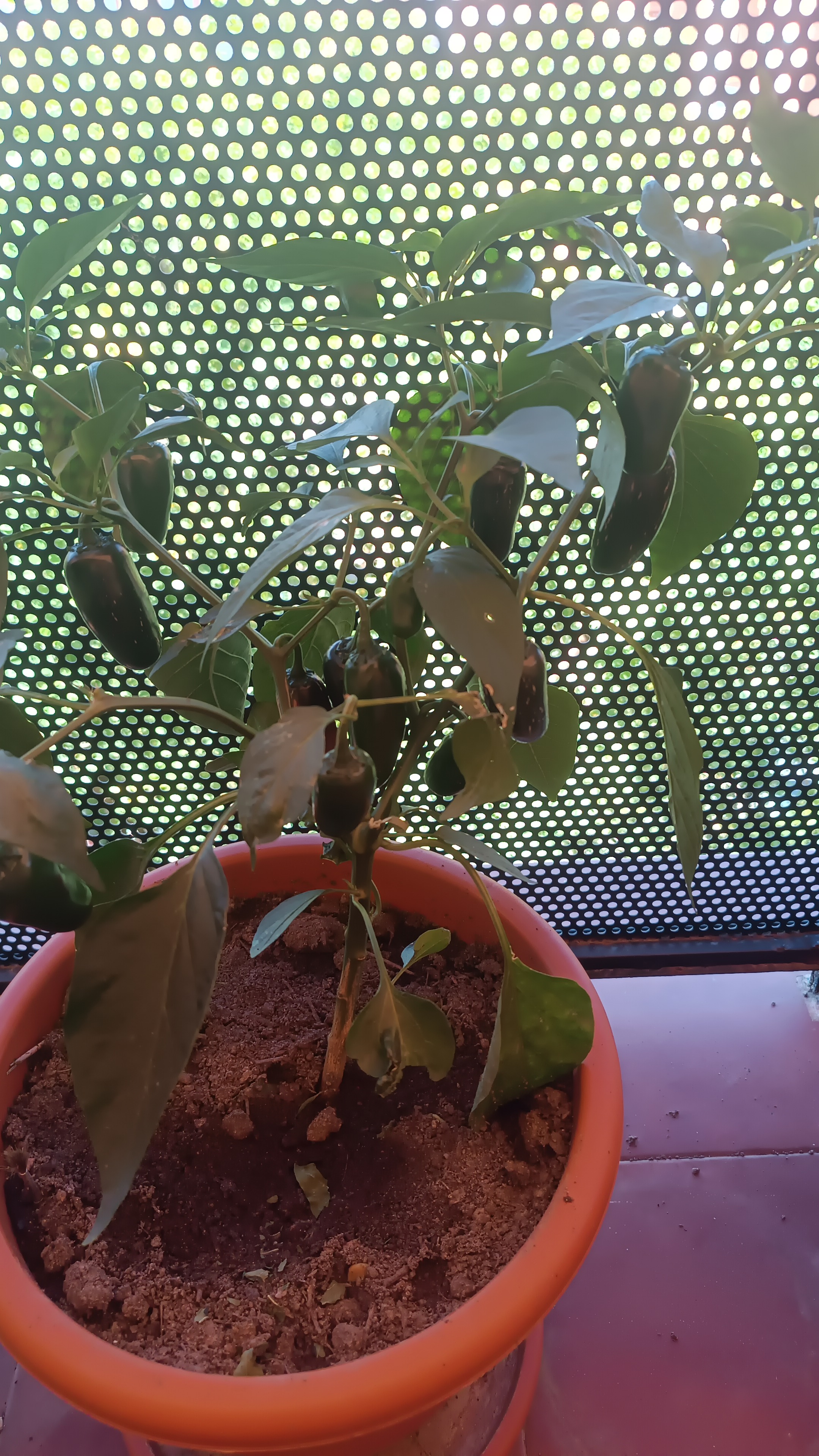
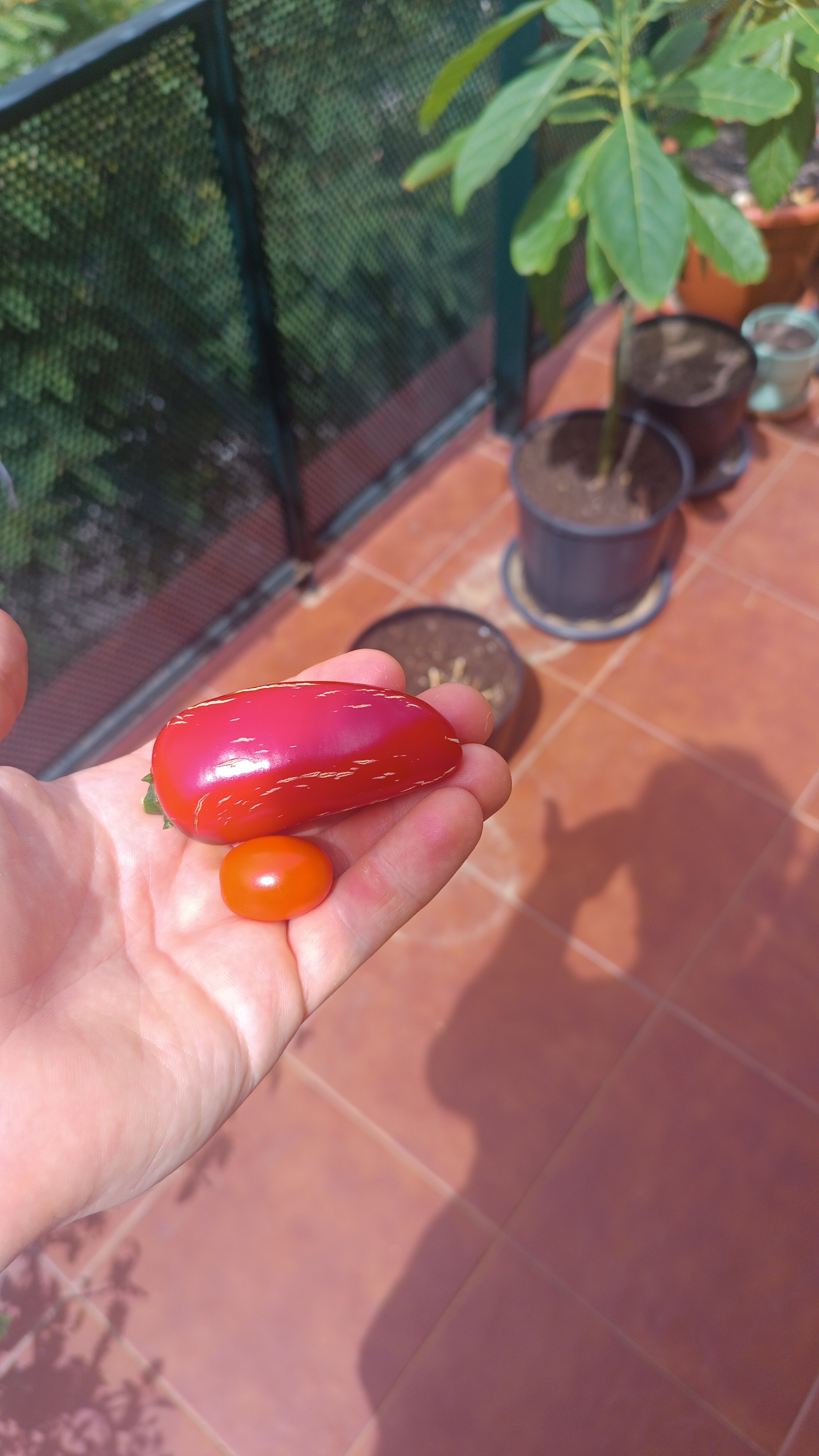
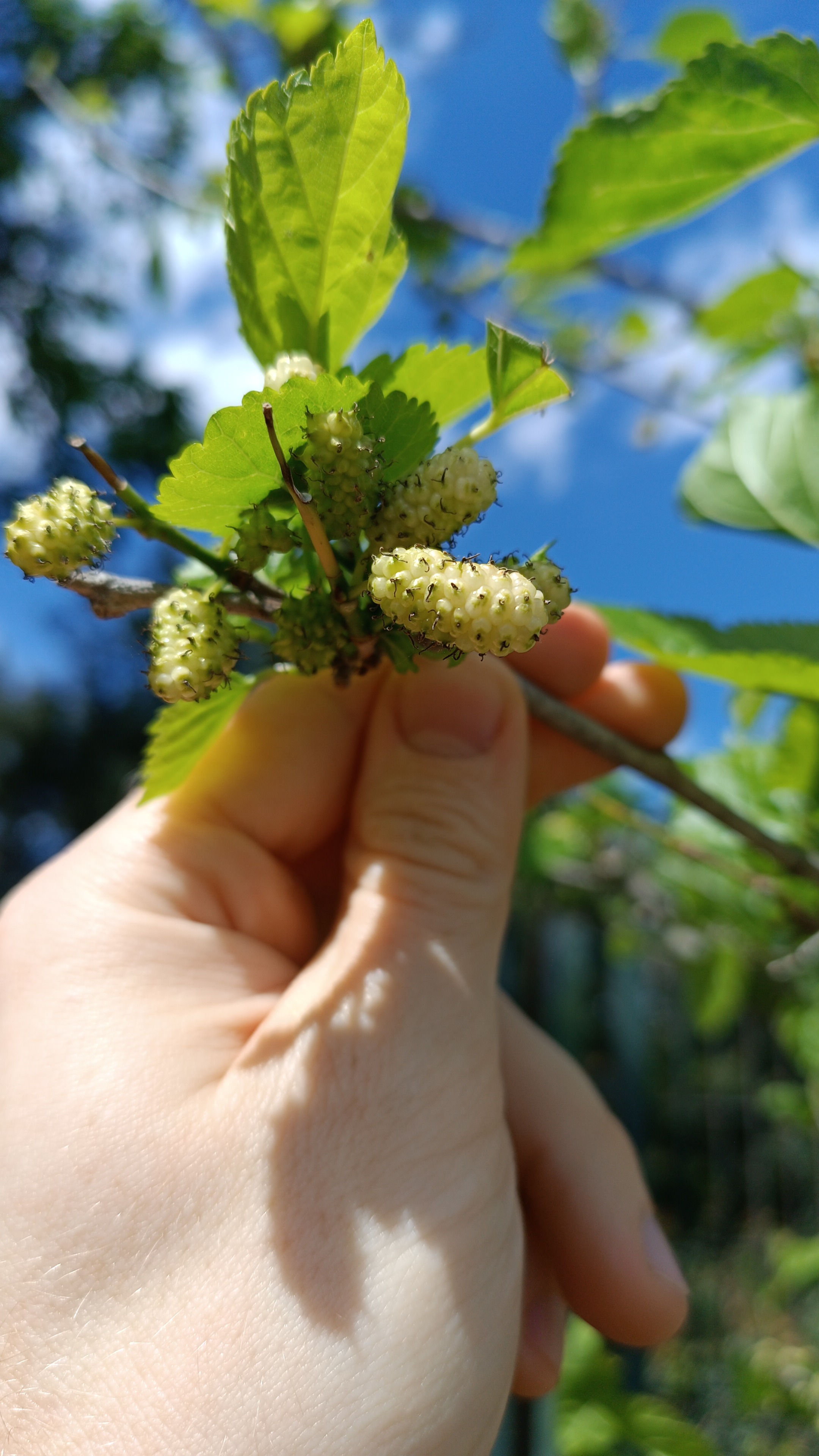
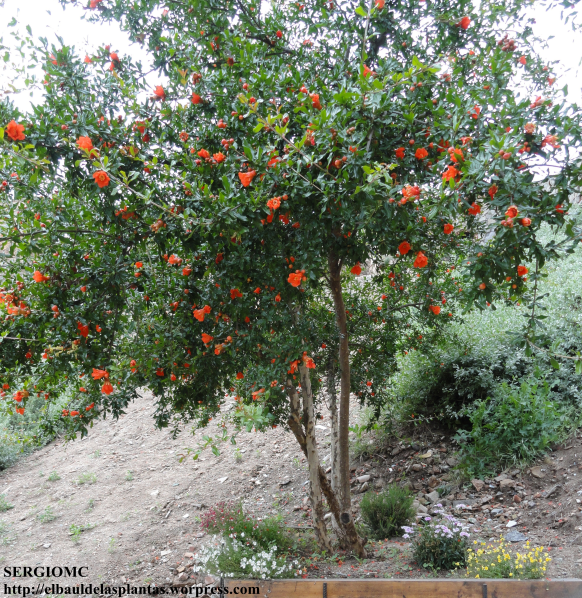
As for foraging, please don’t steal. A lot of people grow fruit trees such as lemons, oranges, avocados, and loquats in their own patio space, but those are off-limits. Instead, visit your own local park. Over the years, I have realized just how much food there is growing in public spaces. In my neighborhood alone, I have found fresh olives, pomegranates, rosemary, dates, bay leaves, plantains, sweet oranges, and mulberries. If you live in Sevilla-este and want to know my spots, you can contact me.
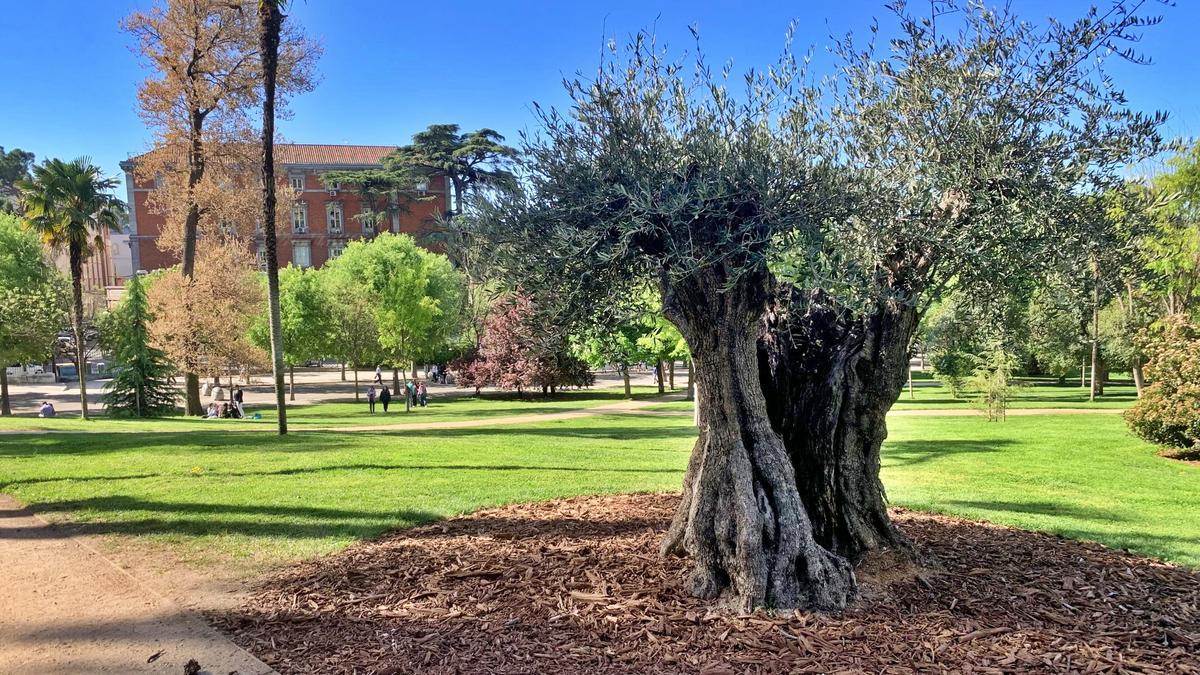
The best part about being environmentally friendly in Spain is that there is no sacrifice. I am eating healthier, more delicious food; saving money on water, electricity, and rent; living much more comfortably; and enjoying life more fully. Let me know what tips you have for being environmentally friendly and saving money!
If you are looking for additional ways to save money, check out:
Extra Income – Teaching Online
Youth Discounts (30 and Below)

If you have found this website useful, please consider making a small donation of a dollar or two to the webpage. I am only able to maintain this website through the support of my viewers, and with only an average of 1 donor per 10,000 viewers, each contribution is vital. You can be the 1 in 10,000 that makes a difference.
https://residency2spain.com/support-the-page/#Donate
(This is just a link to a page with different donation options.)
If you found the website useful, please Support the Page. Every little bit helps.
The information on http://www.residency2spain.com is provided in good faith and is intended for general informational purposes only. Residency2spain makes no guarantees regarding the accuracy, reliability, or completeness of the content. Any decisions you make based on the information found on this site are made at your own discretion and risk. Residency2spain is not liable for any loss or damage resulting from the use of this website.
-
Behind the Scenes – 2025 Finances
How does Residency2spain.com make money, and how much money does it make? I’ve just finished crunching the numbers and can elaborate on how these guides stay financially solvent. If you are motivated, have a unique idea that can help others, and want to make some money on the side, you can try creating a website…

-
Some Good News
Proceed with caution. Although the state of the program may be uncertain, there have been some positive signs (not guarantees) for 2026-2027. If you are unfamiliar with what is happening with the auxiliary program, please check out the previous post. As you are probably aware, the auxiliar de conversacion program is being restructured for 2026-2027.…
-
The Future (or End) of the NALCAP Program
Restructuring of the program, multi-million euro fines, and a delay to the application window! Expect major changes to the NALCAP program. If you’d like to keep up-to-date on what’s happening, you can joinMy Auxiliary Facebook group. Some Good News In 2025, the region of Andalucia was fined by the central government for a failure to…
-
A Podcast?
I’d like to share the podcast I have just started with my audience. it’s called Immigrant, not Expat. My goal is to share stories about immigration to hopefully remove the negative connotation surrounding the word “immigrant”. I am deliberately avoiding the word “expat” because I don’t want to reinforce a caste system for immigration. I…

-
Culture Shock!
People who talk about moving to another country may emphasize how different the culture will be and how to deal with culture shock. Spain is a modernized, western country that isn’t too different from the U.S, so in my experience, “shock” isn’t a great way to describe it. There are some differences, though. Most of…
-
250k Views – Day in the Life
The last time we celebrated a view benchmark, I made a post about myself and what led me to create a life in Spain. Now that we’ve hit 250,000 views, I’m posting feet on main! (Open the full image if you are a sicko). Well, the idea of this post is to share a typical…

-
Santiago de Compostela
On an extended weekend, thanks to a public holiday, my partner and I went to Santiago de Compostela. It’s a beautiful city in the northwestern region of Galicia, which is known for its rainy climate and delicious food. Santiago is an interesting city with a unique history. It is the destination of multiple pilgrimage routes…

-
Extra Income – Teaching Online
There are countless ways of saving money while in Spain, but if you want to be able to travel more and enjoy more experiences, increasing your income is a great way to do that. As native speakers of English with experience teaching English as a foreign language in Spain, your teaching services will be in…
-
Saving Money and Being Environmentally Friendly
You don’t need your own terrace garden like me, but you can easily save money and be better for the environment when living in Spain. One of the joys of moving to Europe is that it becomes possible to be environmentally friendly without sacrificing your lifestyle or money. When I lived in Indiana, I remember…

-
Celebrating 75,000 Views – My Journey to Spain
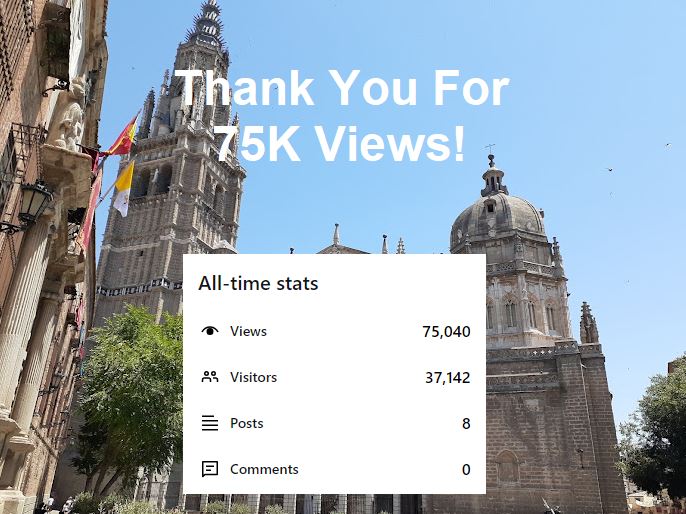
When I first started writing this blog, I never expected getting this type of interest. I just wanted to create something to help others find their lives in Spain and avoid the uncertainties and anxieties that plague bureaucratic processes here. It’s still only a hobby instead of being my actual job, but a lot of…
-
Spanish and U.S. Library Cards
Getting a U.S. library card before leaving for Spain and a Spanish library card while there can provide wonderful (free) services. Libraries have modernized. They provide a wide range of services that can be accessed from anywhere in the world: eBooks, audiobooks, as well as online magazines and newspapers. Individuals travelling to or living in…

-
How I Accidentally Became an Actor in Spain
“Quiet on set, roll cameras, and action!” I desperately choke for breath while grasping at my wounds. With a WW2-era revolver aimed at the entryway of an abandoned farm shed, I am slowly bleeding out while waiting for my enemies to finish me off. Suddenly, I hear noises just outside. It sounds like footsteps, and…

-
NALCAP Webinar 2022 – Highlights
July 28, 2022 Will new regulations affect auxiliares who receive supplemental income in Spain? What should I do before leaving for Spain? How do I find an apartment? What steps should I take first when I arrive in Spain? The 2022 NALCAP webinar covers topics that can help new auxiliaries and returning auxiliaries. Find out…

-
Fun Trips around Madrid
Cercedilla Cercedilla is a mountainside municipality Northwest of Madrid. It is about an hour train ride away with the cercanía trains from Atocha (the main train station). The mountainside is filled with nature, flowers, and there is a small ranch with a herd of cows living their best lives grazing on the mountainside. The cows…

-
Budgeting in Spain
The cost of living is much cheaper in Spain, but the salaries are also much lower. How do I budget? What should I expect to spend and save? Just like the U.S, some places in Spain are more expensive than others. Madrid is one of the most expensive cities in Spain, so if you live…

-
The debate of the century: with or without onion.
Spanish tortilla is a traditional dish in Spain similar to an omelette. It has eggs, potatoes, and sometimes diced onions. In Spain people are passionate about food, especially traditional food, and there is a fierce debate in Spain about which type of tortilla is better: with or without onions. Traditionalists will claim that putting onions…

-
So, you want to move to Spain?
There are many reasons to want to live in Spain. The climate is warm and pleasant. The natural landscapes are breathtaking, and with a guaranteed 22 vacation days a year, you have the time to enjoy them. Culturally, Spanish people are kind, welcoming, and outgoing. This generosity also includes the public services offered. Spain has…

 Spanish Bureaucracy Guides